


7 tiny eco jobs kids can actually take ownership of at home

Helping kids care for the planet doesn’t have to involve elaborate craft projects or a family-wide zero-waste overhaul. These seven tiny jobs give children something practical they can genuinely take responsibility for at home.
Teaching kids to care for the environment can sometimes sound like it needs to involve a big family project, a perfectly labelled recycling station or a weekend spent making something impressive out of toilet rolls.
In reality, some of the most useful habits are much less exciting.
Putting the right thing in the right bin, remembering to switch the light off, carrying empty bottles to the container-return bag, or noticing that the same untouched snack keeps coming home in the lunchbox are all tiny actions, but they help children understand that looking after the environment is part of ordinary family life rather than something that only happens during a school lesson.
National Recycling Week is a handy prompt to take a look at what happens in our own homes, but this doesn’t need to become another ambitious parenting project. Giving your child one small job they can genuinely own is often more useful than asking them to “save the planet”, which is quite a lot of responsibility for someone who may still need reminding where they left their shoes.
The best eco jobs are simple, repeatable and appropriate for your child’s age. They also need to be real jobs, not tasks that quietly create even more work for the grown-ups supervising them.
Here are seven easy places to start.
1. Put them in charge of checking what belongs in the recycling bin
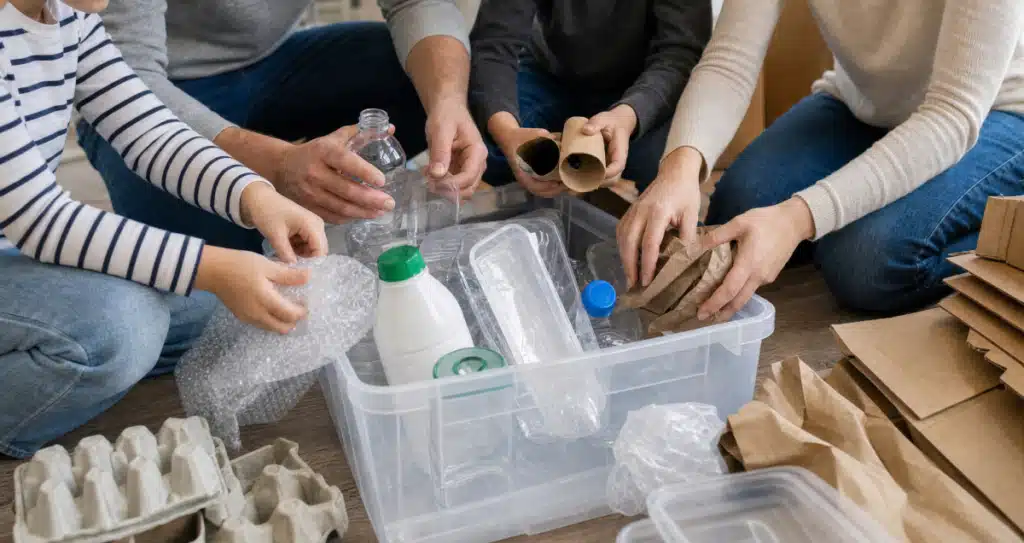
Recycling can seem simple until somebody is standing in the kitchen holding a yoghurt tub, soft plastic wrapper or suspicious-looking takeaway container and asking, “Does this go in the yellow bin?”
The answer isn’t always obvious because recycling rules can vary between councils, which actually makes this a useful job for children to learn with you rather than something they simply memorise once.
Look up your local council’s recycling guide together and focus on the things your family uses most often. Younger children might learn the basics around common paper, cardboard, bottles and cans, while older kids can become the person who checks anything the family isn’t sure about.
You could even make a simple guide to keep near the bins, using pictures for younger children if that helps. This saves everyone from guessing and also means the household recycling system doesn’t depend entirely on your eight-year-old being available for consultation.
The point isn’t to turn them into an expert in waste management. It’s to help them understand that recycling properly matters and that checking is better than hoping for the best.
Sign up
Get tailored content based on your week of pregnancy
By signing up, you agree to receiving our Newsletters. Cancel anytime.


2. Give them ownership of the food-scraps routine
If your household uses a FOGO bin, compost bin or worm farm, food scraps are an easy way for children to see what happens to waste after it leaves their plate.
Depending on their age, they might scrape suitable leftovers into the kitchen caddy after dinner, carry scraps to the compost with you, or help feed the worm farm. Younger children often love this because it feels like a real job rather than a chore invented purely to keep them occupied.
It can also open up useful conversations about food waste without turning every uneaten carrot into a lecture. If the same sandwich comes home untouched three days in a row, an older child can help work out whether the portion is too big, they don’t like the filling anymore, or sandwiches have simply fallen out of favour since Monday.
If you use a council FOGO service, check what your local service accepts, because rules can differ. Once you know the basics, though, it’s a job children can quickly make part of their routine.
3. Make them the family container-return collector
This is one of the easier eco jobs to hand over because there’s a very visible result at the end.
Every Australian state and territory now has a container deposit scheme, so eligible drink containers can be collected and returned for a refund. Set up a bag, tub or box somewhere accessible and make your child responsible for putting eligible containers into it rather than leaving them on the kitchen bench for somebody else to deal with.
Older children can help sort the containers, take them to a return point and count the refund afterwards. Depending on your family, the money could go towards a small treat, a family outing, savings or a cause your child chooses.
It makes the idea of recycling much more concrete because they can see that the bottle or can didn’t simply disappear into a bin. It went somewhere useful, and in this case it even came back with ten cents attached.
Just remember that not every container is eligible, and younger children will still need supervision around glass or anything sharp.
4. Start a 'reuse before we replace it' basket
Recycling is useful, but sometimes the better option is simply to keep something in use for longer.
Give children a basket, box or shelf where the family can put things that are still useful but no longer needed. That might include clothes they’ve grown out of, books they’re finished with, toys they’ve moved on from or craft supplies they no longer use.
Every so often, go through the collection together and decide what could be passed to another family member, donated, sold or reused somewhere else at home.
This helps children move away from the idea that “I don’t want this anymore” automatically means “put it in the bin”, while also giving them some ownership over what happens to their belongings.
There will, of course, be occasions when the broken plastic whistle they haven’t touched in two years suddenly becomes a deeply treasured family heirloom the second you suggest moving it on. Sustainability, like most things in parenting, may require a little patience.
5. Give them one proper job on bin night
You don’t need to make a five-year-old responsible for remembering the council collection schedule, but most children can have one predictable job when bin night rolls around.
They might collect cardboard from around the house, bring the small recycling tub from the kitchen to the main bin, help flatten suitable cardboard boxes or check that obvious rubbish hasn’t landed in the recycling.
Older children can take on more responsibility, such as checking which bins need to go out that week or helping move lighter bins with an adult.
The real value is in the repetition. When a job happens at roughly the same time each week, children are more likely to start remembering it themselves rather than waiting to be told.
There is also a very particular kind of parental satisfaction in hearing your child announce, “It’s recycling night,” before you’ve remembered it yourself.
6. Turn them into a lunchbox waste detective
This one isn’t about monitoring every bite your child eats. It’s about noticing what regularly comes home and working out whether anything could be packed differently.
If half an apple keeps returning untouched, perhaps a smaller amount would be enough. If one snack consistently comes home, your child may simply not like it anymore. If there’s lots of disposable packaging, an older child might be able to help choose an alternative that can go into a reusable container instead.
Children can also take responsibility for emptying their lunchbox after school and sorting what’s left into the right place. Reusable containers go back to the kitchen, suitable food scraps go into compost or FOGO where available, and rubbish or recycling goes where it belongs.
It turns food waste into something they can actually see and understand without making them feel guilty about what they didn’t eat.
The message is simply that we can notice what we use, notice what we waste, and make small adjustments where they make sense.
7. Give them one 'last one out' responsibility
Not every eco job needs to involve recycling.
If your child is old enough, make them responsible for one simple thing when they leave a room. It might be switching off the light, turning off a fan, checking that the tap is properly off or making sure the television isn’t still playing to an empty lounge room.
Keep the responsibility small and specific rather than appointing them Household Sustainability Manager at seven years old.
Children often love having an official job, especially when it gives them permission to catch adults forgetting the same rule. There’s a very good chance that within a few days you’ll hear, “Mum, you left the light on,” shouted from the other end of the house with enormous satisfaction.
Fair enough. Accountability works both ways.
The goal isn't to raise a perfect little environmentalist
There’s a risk with sustainability conversations that children start to feel responsible for environmental problems far bigger than anything one family can solve.
That isn’t the point of these jobs.
The aim is to make caring for the environment feel ordinary and manageable. We use things, so we think about where they go when we’re finished with them. We eat food, so we try not to waste more than we need to. We own things, so we consider whether somebody else could use them before they become rubbish.
You don’t need a perfectly organised recycling station, a flourishing vegetable garden and a child who can explain the circular economy over breakfast. Pick one job that fits naturally into your family life and let them get genuinely good at it before adding something else.
Over time, those small habits can add up to something much more useful than one week of enthusiastic eco activities. They can help raise a child who automatically thinks about what they use, what they throw away and whether there might be a better option.
And, with any luck, someone else in the house who remembers bin night.
FAQs
What are some easy eco jobs for young children?
Young children can help sort familiar recycling, carry suitable food scraps to a compost or FOGO caddy, collect eligible drink containers, switch off lights and help gather reusable items around the house. Keep jobs simple and supervise anything involving glass, heavy bins or other hazards.
How can I teach my child to recycle properly?
Start with the items your household uses regularly and check your local council’s recycling rules together. Because recycling systems can differ between areas, a simple guide near your bins can be more useful than trying to teach children one universal list.
Can kids help with composting?
Yes. Depending on their age, children can help collect suitable scraps, add them to a compost bin or worm farm and learn about what happens as organic material breaks down. If your household uses FOGO, check your local council’s rules about what can be included.
What is a container deposit scheme?
Container deposit schemes allow people to return eligible drink containers for a refund. Every Australian state and territory has a scheme, although the program name and return process vary depending on where you live.
How do I get kids interested in sustainability without making it another chore?
Give them one small job with a clear purpose and let them genuinely own it. Children are often more engaged when they can see the result of what they’re doing, whether that’s filling a container-return box, feeding a worm farm or becoming the person who remembers which bin goes out.
How can I talk to kids about environmental issues without making them anxious?
Keep the focus on age-appropriate, practical actions rather than making children feel personally responsible for solving large environmental problems. Small household habits can help them feel capable and connected to the world around them without placing too much weight on their shoulders.
Related Articles


Loved this article?
Share with a friend