




The tiny milestones that mean everything after premature birth
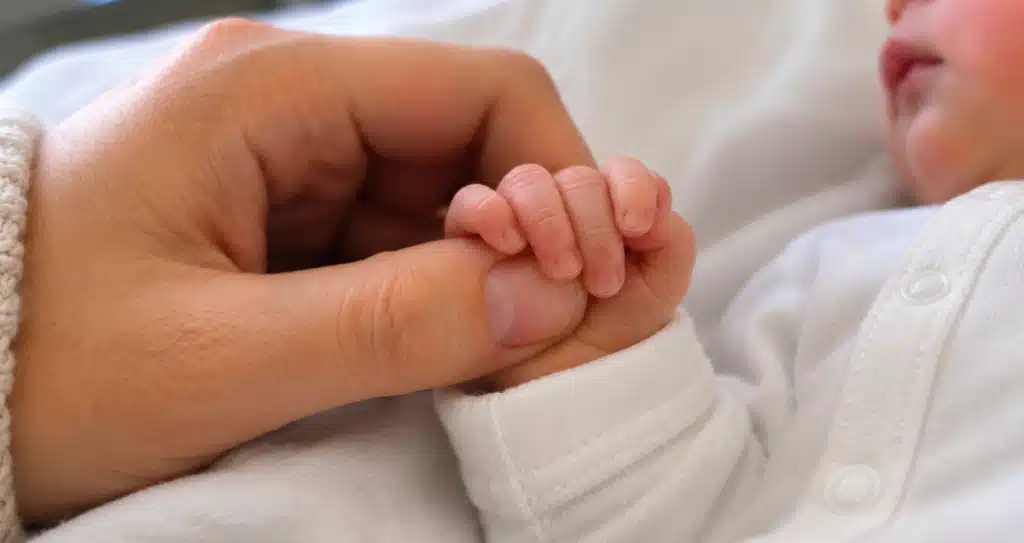



After a premature birth, milestones can take on a completely different meaning. Sometimes the biggest celebrations are the first cuddle, a few extra grams or the day one less monitor is needed.
When your baby arrives early, the milestones you imagined during pregnancy can suddenly be replaced by ones you never knew existed.
Instead of wondering when they’ll first smile or roll over, you might find yourself celebrating a few extra grams on the scales, the first time you can change their nappy yourself, a feed that goes well or the moment one more tube or monitor is no longer needed.
For families who spend time in a special care nursery or neonatal intensive care unit, progress can happen in tiny increments. Some days bring obvious steps forward, while others are about simply holding steady, and that can make seemingly ordinary moments feel enormous.
World Prematurity Day is a chance to recognise babies born too soon and the families who travel this path with them, but these milestones belong to families every day of the year. There is no single version of the premature-baby journey, and not every baby will experience the same moments in the same order.
Still, there are some small firsts that can carry a surprising amount of meaning.
Sign up
Get tailored content based on your week of pregnancy
By signing up, you agree to receiving our Newsletters. Cancel anytime.


The first time you get to hold your baby
For many parents, holding their newborn immediately after birth is something they had barely imagined needing to hope for.
After a premature birth, particularly when a baby needs intensive medical support, that first cuddle may happen hours or days later. Sometimes it involves carefully navigating wires, monitors and breathing support while a nurse helps position a very small baby against your chest.
Skin-to-skin contact, often called kangaroo care, can become one of those moments parents remember in extraordinary detail: the weight of their baby against them, the tiny hand tucked against their chest and the strange combination of joy and nervousness that comes with finally being able to hold them.
It might not resemble the first cuddle you pictured during pregnancy, but that doesn’t make it any less yours.
The first nappy change that feels strangely momentous
Changing a nappy is not generally considered one of parenthood’s great privileges, at least until someone else has been doing most of your baby’s care.
In a neonatal unit, medical staff may initially need to manage many of the everyday things parents expected to do themselves. Being invited to change a nappy, take a temperature, help with mouth care or participate in another part of your baby’s routine can therefore feel like a small piece of parenthood being handed back.
The first attempt may also be slightly intimidating when the baby in front of you is much smaller than any baby you’ve ever dressed or changed.
Over time, these ordinary caregiving moments can become a way of getting to know your baby and feeling more confident in your place beside all the medical equipment.
Watching the numbers slowly move in the right direction
Parents of premature babies can become unexpectedly invested in numbers.
Weight. Oxygen levels. Millilitres of milk. Gestational age. The amount taken at a feed. Numbers that may once have meant very little can suddenly carry enormous emotional weight.
A gain that looks tiny on paper can feel huge when you’ve been waiting for it.
Premature babies grow and develop differently depending on how early they were born, their health and the complications they may have experienced. Progress is rarely perfectly linear, which means there may be days when the numbers move backwards or stay stubbornly still.
That can be difficult when you’ve become used to looking for evidence that things are improving. Your baby’s healthcare team is best placed to help interpret what those numbers mean for your baby, particularly because one measurement rarely tells the whole story.
The day feeding begins to feel a little easier
Feeding is one of those things that can look effortless until you have a baby who was born before their sucking, swallowing and breathing skills were ready to work together.
Depending on how early they arrived and their health, a premature baby might initially receive milk through a feeding tube before gradually learning to breastfeed or bottle-feed.
Those transitions can take time.
A first successful suck, a longer breastfeed, finishing more of a bottle or moving closer to taking all feeds without a tube can become important milestones on the way home.
Feeding progress can also be unpredictable, and it can carry a lot of emotion for parents. If your baby needs extra support or a different feeding path from the one you imagined, that isn’t a reflection of how well you are parenting them.
Sometimes the milestone is simply that today’s feed was a little easier than yesterday’s.
The first tiny outfit
There may be a point when your baby moves from needing easy access for medical care to being ready for their first proper clothes.
It sounds like such a small thing.
Then suddenly you’re choosing a tiny onesie and carefully manoeuvring it around a body that once seemed too fragile to dress, and it feels anything but small.
For some parents, clothes are one of the first visible signs that life is beginning to resemble the newborn experience they expected. There may still be monitors and medical care around them, but underneath all of that is your baby wearing the outfit you chose.
Even if the sleeves need to be rolled up approximately four times.
When there is one less piece of equipment
Parents often become surprisingly skilled at managing a cuddle around cables, tubes and monitors.
Then one day there might be fewer of them.
Perhaps breathing support changes, a feeding tube is no longer needed, or your baby moves from an incubator into an open cot. The details will be different for every baby, and medical support should never be viewed as something a baby needs to “beat” on a particular timetable.
Still, when the healthcare team decides your baby no longer needs something they once relied on, the change can feel significant.
Sometimes the milestone is simply seeing a little more of your baby underneath all the equipment.
Moving into an open cot
For babies who begin life in an incubator, moving into an open cot can be another quietly enormous step.
It can mean they’re able to maintain their temperature without the same level of support, depending on their individual situation and their unit’s practices.
To somebody walking past, it might look like a baby sleeping in a hospital cot.
To the parent who has spent weeks reaching through incubator doors, it can feel like the distance between them has suddenly become a little smaller.
There are milestones that come with balloons and photographs, and others that look like nothing more than being able to reach over and touch your child without opening a little plastic door first.
Both count.
The day somebody starts talking seriously about home
Coming home after a neonatal stay is rarely one dramatic moment. More often, the possibility starts appearing slowly in conversations.
Your baby may need to be feeding adequately, growing, maintaining their temperature and meeting other health goals set by their medical team before discharge is appropriate. Some babies go home with ongoing medical needs or follow-up care, while others need less support.
The first time someone says, “We’re starting to think about discharge,” can still land heavily.
Parents often describe wanting desperately to leave hospital while simultaneously feeling terrified of losing the monitors, nurses and reassurance that have surrounded their baby.
Both feelings can exist at once.
Bringing a premature baby home doesn’t mean the whole experience disappears at the hospital doors. It simply means the next part of the journey is beginning somewhere new.
That first ordinary day at home
Once you’re home, something beautifully strange can happen: ordinary newborn life starts appearing.
There are nappies on the couch, bottles or feeding equipment drying in the kitchen, tiny clothes in the washing machine and a baby making noises beside your bed at 3 am.
After weeks or months of hospital routines, ordinary can feel extraordinary.
Home can also bring new worries. Without monitors constantly displaying numbers, parents may find themselves watching their baby closely or wondering whether every sound is normal. Follow-up appointments and developmental checks can continue long after discharge, particularly for babies born very early or with ongoing health needs.
There is no expectation that crossing the hospital threshold should immediately make everything feel easy.
Sometimes the milestone is simply waking up and realising your baby is home.
Learning to look at development through corrected age
Once the early hospital milestones begin to give way to familiar baby milestones, another term often becomes part of family life: corrected age.
Corrected age takes into account how early your baby was born. If your baby is six months old but arrived two months before their due date, their corrected age would be around four months.
Health professionals often use corrected age when looking at premature babies’ growth and development during the early years because comparing only by the number of months since birth can make a baby appear behind when they may actually be developing appropriately for the age they would have been if born around their due date.
That can be particularly helpful when well-meaning people start asking whether your baby is sitting, crawling or doing whatever their same-age cousin apparently mastered three weeks ago.
Most health professionals recommend taking corrected age into account for at least the first two years, although your child’s healthcare team can guide you based on their individual circumstances.
The smiles, rolls and firsts still matter too
Premature babies still have all the ordinary developmental firsts waiting ahead of them.
The first proper smile. Reaching towards you. Discovering their feet. Rolling over. Sitting, crawling, babbling and eventually finding increasingly creative ways to access everything you thought was safely out of reach.
Some babies will reach those milestones around their corrected age, some earlier and some later. Premature birth can increase the likelihood of developmental differences, particularly for babies born very early or those who have experienced significant medical complications, which is why follow-up care remains important.
If you’re worried about how your baby is developing, your child and family health nurse, GP, paediatrician or developmental team can help look at the whole picture rather than one milestone in isolation.
The internet has many milestone charts. Your baby has only one developmental story.
Try not to let somebody else's timeline become your measuring stick
Comparison is difficult to avoid in early parenthood, and it can feel especially complicated after premature birth.
A baby from your antenatal group may already be sitting. Someone else’s child might be sleeping differently, eating solids or wearing a clothing size your baby hasn’t reached yet. Even another premature baby born at the same gestation may follow a completely different path.
Corrected age can provide useful context, but there is also enormous variation between individual children.
That doesn’t mean parents should ignore concerns or simply “wait and see” when something worries them. Follow-up care matters, and early support can be valuable when a baby needs it.
It simply means your baby’s progress deserves to be looked at in the context of their beginning, health and development rather than somebody else’s calendar.
There can be complicated feelings around milestones too
A milestone can bring enormous joy and still carry grief alongside it.
Your baby’s due date may arrive while they’re already weeks or months old. Their first birthday can bring memories of a birth that was frightening rather than celebratory. Leaving hospital can be wonderful while also meaning goodbye to the people who have cared for your family through some of its hardest days.
Parents may feel grateful, relieved, frightened, proud, exhausted or all of those things within the same afternoon.
There is no correct emotional response to having a premature baby.
You’re also allowed to feel proud of a milestone without needing to call your baby a fighter, warrior or miracle if that language doesn’t feel right for your family. Some parents love those words and find strength in them, while others don’t.
Your experience belongs to you.
The smallest milestones are still milestones
Premature birth can change the scale by which families measure progress.
A gram matters. A feed matters. An afternoon of skin-to-skin matters. The first bath, the open cot, the trip home and the day a monitor is no longer part of the room can each become their own marker in time.
Later, those milestones may look more familiar: a laugh, a roll, a first word or a pair of determined little legs making their way across the lounge room.
None of them needs to happen according to somebody else’s schedule to be worth celebrating.
Perhaps that’s one of the things families learn after a beginning they never expected: progress isn’t always loud, and it isn’t always linear.
Sometimes it arrives in a few extra grams, a quieter monitor or a tiny hand curling around your finger.
And sometimes, tiny is enormous.
FAQs
What is corrected age for a premature baby?
Corrected or adjusted age takes into account how early a baby was born. It is calculated by subtracting the number of weeks or months a baby was premature from their chronological age. Health professionals often use corrected age when considering growth and development during the early years.
How long should I use corrected age?
There isn’t one point that applies to every child, although many health professionals recommend considering corrected age until at least two years of age. Your baby’s healthcare team can advise you based on their gestation, health and development.
Do premature babies reach milestones later?
Some premature babies reach developmental milestones later when measured by chronological age, which is why corrected age can be useful. Most premature babies develop similarly to babies born at term, although babies born very early or with significant medical complications have a higher likelihood of developmental concerns.
When should I be concerned about my premature baby’s development?
If you have concerns about your baby’s movement, feeding, communication, growth or development, talk with your child and family health nurse, GP, paediatrician or developmental team. They can assess your child using their individual history and corrected age where appropriate.
What are common NICU milestones for premature babies?
They vary considerably depending on how early a baby was born and their medical needs. Families might celebrate moments such as skin-to-skin contact, participating in cares, feeding progress, gaining weight, moving into an open cot, needing less medical support and eventually being ready to go home.
Does coming home mean my premature baby no longer needs follow-up care?
Not necessarily. Some premature babies continue to have developmental, feeding, medical or specialist follow-up after discharge. Your baby’s healthcare team should explain the appointments and support recommended for your child.
Related Articles


Loved this article?
Share with a friend