




The allergy journey can feel tricky, but it doesn’t have to be




After navigating cow’s milk allergy with two children, Kelly learned that the right support team can turn confusion into confidence, one slow, steady step at a time.
Brought to you by Novalac Allergy Toddler
There’s a particular kind of uncertainly that can come with feeding a child who never seems comfortable. It’s there in the 2am scrolling. In the mental tally of every feed, every rash, every unsettled sleep, every nappy that makes you pause and wonder, Is this normal? It’s in the way your gut tells you something isn’t quite right, while another part of you worries you’re overreacting.
For Kelly, that feeling was intensified by timing. Her first child’s early allergy journey unfolded during Covid, when so many of the usual parenting touchpoints (mothers’ groups, casual check-ins, family drop-ins, the reassuring “same here” from another parent) were suddenly so much harder to access.
“I felt quite isolated, if I’m completely honest,” she tells us.
Kelly is now a mum of two children who have both experienced cow’s milk allergy. Her eldest, Will, has slowly built tolerance over time. Her youngest, Izzy, now 21 months, is still on the journey.
If there’s one thing Kelly wishes more parents knew, it’s this: cow’s milk allergy is not something you have to figure out alone.
When your child’s symptoms don’t fit neatly into one box
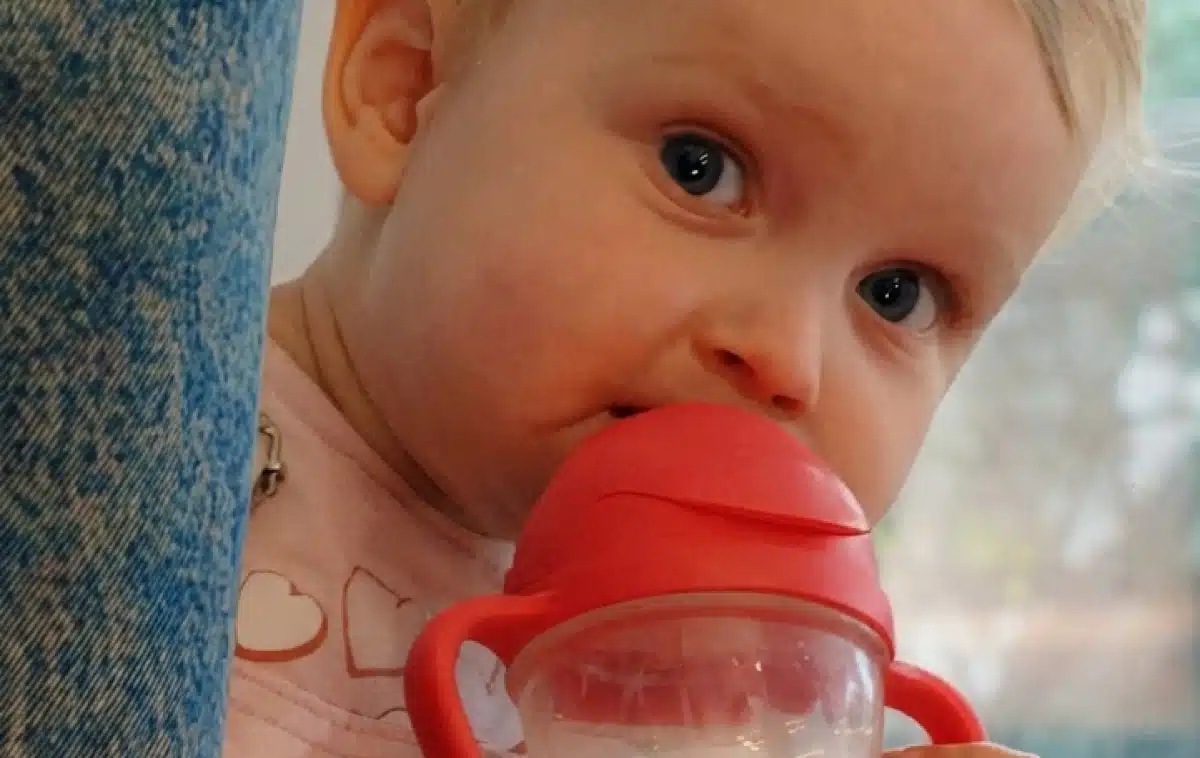
Cow’s milk allergy, sometimes referred to as cow’s milk protein allergy or CMPA, is an immune reaction to proteins found in cow’s milk. It is different to lactose intolerance which is a problem with digesting the carbohydrate in the milk.
For young children with cow’s milk allergy, symptoms can show up in different ways and are often delayed, which is why it can be so hard for parents to connect the dots at first.
That uncertainty is often one of the hardest parts.
A child with cow’s milk allergy may cry after feeds, they might pull away, vomit, have mucus in their poo, develop a rash, or seem generally unsettled. Some symptoms can overlap with other common childhood concerns, such as reflux, diarrhoea or normal fussiness. And for parents, that grey area can feel exhausting.
Kelly remembers not knowing where to start. Was it feeding? Digestion? A phase? Something else entirely?
Eventually, she and her family began building the support team they needed.
“We absolutely saw a dietitian, paediatricians, immunologists,” she says. “We got the skin prick test with my eldest. Turns out egg was a thing as well. So there were multiple factors.”
That discovery mattered. Because sometimes, cow’s milk allergy isn’t the only piece of the puzzle.
Sign up
Get tailored content based on your week of pregnancy
By signing up, you agree to receiving our Newsletters. Cancel anytime.


The right support team changes everything
One of the biggest shifts for Kelly was moving from isolated worry to guided care.
Each healthcare professional can play a different role: helping assess symptoms, diagnosis, supporting nutrition, and guiding safe food avoidance or reintroduction when appropriate.
That support can be practical, but it’s emotional too. Because when you’re feeding a child with allergies, every decision can feel loaded. What do I remove? What do I replace it with? Are they getting enough? Will this reaction set us back? Am I being too cautious, or not cautious enough?
A good care team doesn’t just give parents instructions. They give them a framework to lean on.
The dairy ladder: slow is still progress
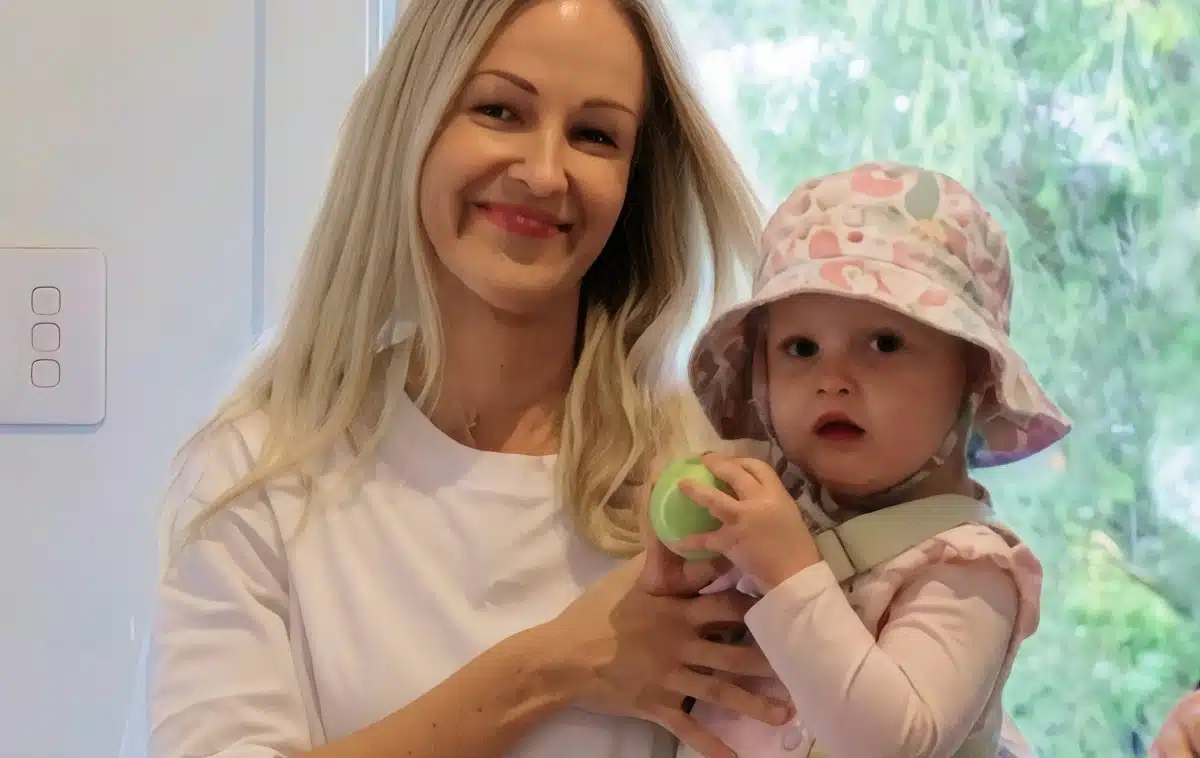
With Will, Kelly’s family eventually started the dairy ladder. This is a gradual, structured reintroduction of dairy under medical guidance and supervision.
For many families, the idea can feel counterintuitive. After months or years of avoiding a food because it causes symptoms, slowly bringing it back can feel scary.
That does not mean every child follows the same path, or that reintroduction should be rushed. For Kelly’s family, the dairy ladder wasn’t a quick fix. It was a long, careful process.
“Eventually, after a few years, his gut was like, right, I’m good with this,” Kelly says.
And with her youngest, the pace is different again.
“She’s 21 months now and still quite suffering,” Kelly says. “We’re still using specialised formula and just really going slow with the dairy.”
That contrast between siblings is important. Two children can have the same broad diagnosis and still have very different experiences.
When your instinct is to cut everything out
Kelly describes one of the hardest emotional tensions of the allergy journey: when a food seems to be causing discomfort, every instinct tells you to remove it completely and never look back.
“It’s kind of opposite to what you want to do,” she says. “You want to reduce it and just cut it out.”
That response is completely understandable. Watching your child feel uncomfortable can bring up a fierce protective instinct. You want relief. You want certainty. You want to do what feels safest for your child.
But with medical guidance and supervision from your healthcare team, the focus is often not simply on avoidance. For many families, the longer-term goal is to help children progress towards tolerance when they are ready. The path will look different for every child, but it may involve a period of avoidance followed by carefully supervised reintroduction.
“The goal, thanks to the support team, is we want to introduce it slowly but surely,” Kelly says. “And then eventually they’ll be okay, hopefully, with the soy and the dairy as their little guts mature.”
Your child’s journey is not a race
One of the most reassuring parts of Kelly’s story is also one of the most honest: progress can be uneven.
Her eldest has improved over time, though he can still have some digestive upset. Her youngest is still very much in the thick of it. There is hope, but there is no perfect timeline.
That’s something many allergy parents need to hear.
It’s easy to compare. To wonder why someone else’s child grew out of it faster. To feel defeated when symptoms return. To feel nervous when trying a new food, even if your healthcare team has said it’s time.
But tolerance is not a straight line. Feeding confidence is built slowly through information, support, trial, review and reassurance.
You are not overreacting for asking for help
Perhaps the most important message from Kelly’s story is that parents should not have to wait until they are completely overwhelmed before seeking support.
If something feels off, it’s okay to ask for help. If symptoms are persistent, it’s okay to keep asking. If you feel dismissed, it’s ok to seek another opinion. If you’re navigating a cow’s milk allergy and don’t know where to start, ask for a referral to a specialist or dietitian who can support your journey as part of your healthcare team.
Feeding your child can be emotionally charged, especially in those early days. When feeding becomes stressful, parents need more than instructions. They need calm, credible information. They need experts who can explain. They need other parents who can say, I’ve been there too.
Kelly’s story is a reminder that while cow’s milk allergy can feel isolating, support changes the experience. Not overnight. Not perfectly. But enough to help you take the next step. And then the next.
The right support can make a world of difference. Kiindred’s Parenting with Confidence series brought to you by Novalac Allergy Toddler brings you calm, credible education that meets you as a parent in the messy middle of uncertainty, without making you feel even more so. The campaign is built around real parent questions, expert guidance and emotional reassurance for families navigating cow’s milk allergy. For more, see HERE.
This article is for general information only and is not a substitute for personalised medical advice. If you’re worried about your child’s symptoms, feeding, growth or nutrition, speak with your GP, paediatrician, allergist or paediatric dietitian.
Novalac Allergy Toddler is a Food for Special Medical Purposes. Use under medical supervision. AU-IMF-09-26-00007
Related Articles


Loved this article?
Share with a friend