



The sleep issue nobody talks about. Here's what's actually helping.
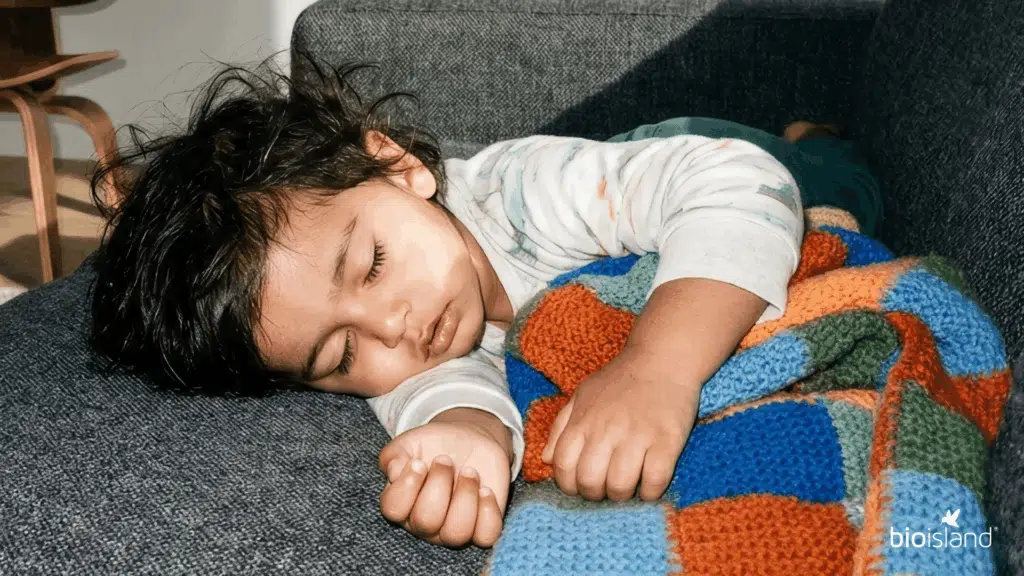

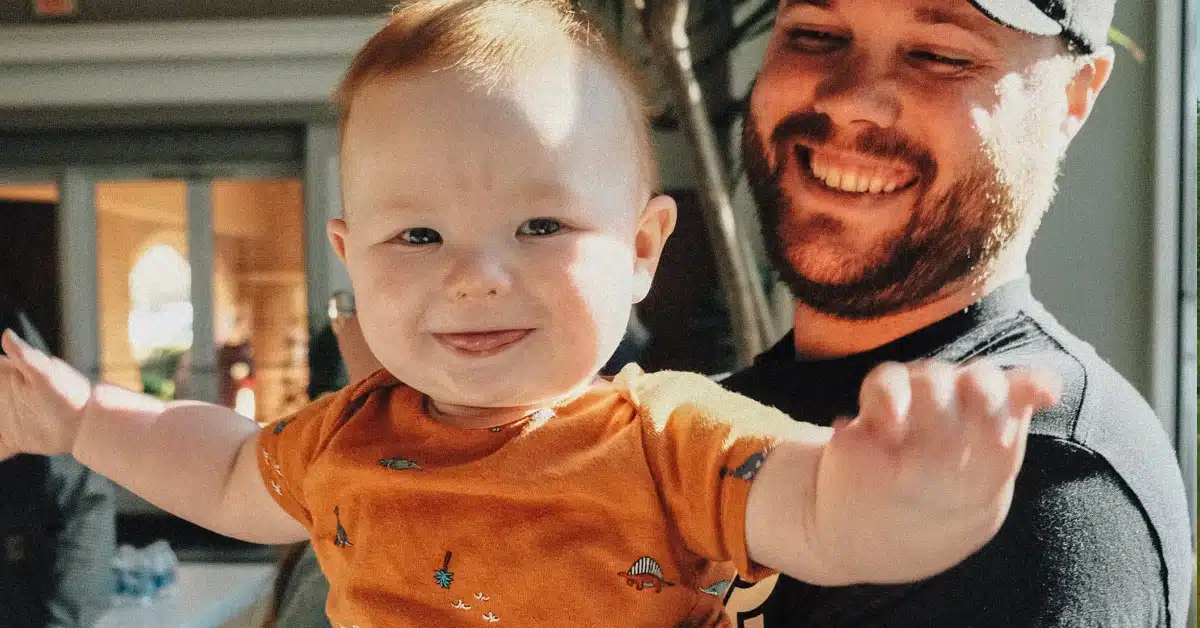
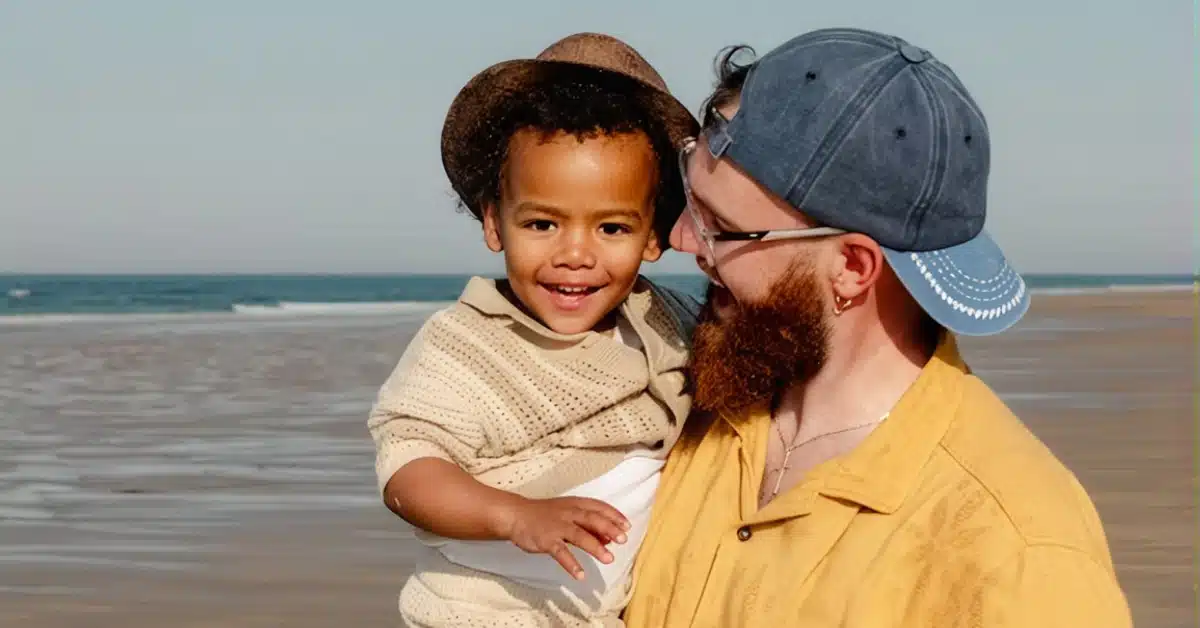
Cold nights, sick kids and broken sleep. Here is what can actually help parents get through it.
I have not slept properly in four years.
I want to say that at the start, before we get into the expert advice and the practical tips and the things that actually help. Because most sleep content is written from the perspective of someone who has, at some point recently, slept. And I think it is important you know that this is not that piece.
This is from the inside.
Four years of broken nights. Once my eldest finally slept through the night, then came the newborn years of my second born. And while he’s now almost 20 months old, he still channels a newborn’s sleep cycle. Up two, three times a night. Sometimes for hours at a stretch.
There’s a particular and weird relief of finding someone who gets it.
And while I know I’m far from alone in this, there’s something weirdly comforting when you meet a parent who is also spending their nights in the trenches. When we were filming this month’s Bloom, Our Way! installment, we headed to Thirroul to spend a day with Vanessa, a mum of two boys, Tui and Tanoa, who traded city life for the escarpment, the ocean and a backyard her boys call the jungle.
She told me about her nights. The musical chairs between the double mattress and the bottom bunk. Tanoa at midnight. Tui at 3am. Everyone back on the double mattress by 5am, both boys sleeping directly on top of her.
“Most nights I move between the double mattress and the bottom bunk at least three times,” she told me. “Last week I woke up because Tanoa was sleeping on my chest and I couldn’t breathe. I didn’t move him.”
I laughed. Not because it was funny (though it was, of course), but because I knew exactly what she meant. The particular logic of a parent who can’t breathe but also cannot move the small person who is the reason they can’t breathe, because one day that small person won’t need to sleep this close.
“I was the same as a child,” Vanessa said. “Until I was eleven, I needed my mum close. I know exactly what they’re asking for. Because I asked for it too.”
She laughed and said, “There is a Bluey episode, Sleepytime, the one Tui has watched approximately fifty times, where Bingo floats through the universe in her dreams while the rest of the house is AWAKE.
“In that episode, her mum is the sun. She’s not scared. She knows her mum is there. That’s my life. The boys, they don’t need much at night, they just need to know where I am.”
Sitting across from her, I felt something I hadn’t expected: relief. The particular relief of someone who has been quietly convinced they were the only one, finding out they weren’t. Not the only one who was tired. Not the only one who was doing the midnight shuffle. Not the only one who had been awake at 4:30am cancelling the day ahead (again). Also, cool: someone to message at 3am.
This is what this campaign is about, really. Not fixing the hard parts. Just making sure you know you are not doing them alone.
And then, winter properly enters the chat
This winter was a late starter, but it’s well and truly here now. And with the cold, everything that was already hard seems to gets harder.
The cough that starts at midnight. The congested child who cannot settle, cannot get comfortable, cannot understand why their nose is doing this. The parent (ME) who has been up since 2am, finally back in bed, lying awake listening for the next sound, unable to fall back into proper sleep even when the house goes quiet.
We checked in with Chris Minogue, Australia’s leading Mothercraft Nurse, with over 35 years of experience supporting families through all aspects of early parenthood, to understand what winter is actually doing to children’s sleep, and what parents (specifically, and selfishly: Vanessa and I) can do about it.
Her answer was simpler than most parents expect.
“I think generally that the babies and the toddlers might be cold.”
Not anxious, not overtired, not in need of a new settling approach or a sleep course or a complete routine overhaul. Just cold.
“Because there’s so much around togs and what those look like, we forget to warm the body of the baby,” Chris says.
She points to Finnish research into babies sleeping in cooler conditions, which suggests that cooler air can actually support longer sleep, provided the child is dressed appropriately. The key, Chris explains, is comfort rather than a specific temperature. Keep the body warm, leave the head uncovered, and check the tummy or back rather than the naturally cooler hands and feet.
“Focus on layering,” she says. And look at materials.
If you have a toddler who moves around the bed (and most toddlers do, with an enthusiasm that should probably be studied), look at what their underlay is made of.
“Is it a wool base that breathes and keeps them nice and warm? In winter, you don’t need to stick to cotton sheets, try something warmer like a jersey or flannelette.” A doona tie is also worth considering, to keep everything in place once their nighttime adventures begin.
For babies specifically: “A young baby, now, in Sydney, needs two layers on: the singlet, the onesie, and then appropriate sleep suits from there.”
A trap for newcomers, Chris says, is the sleep suit that technically fits the age range but not the actual child. “The tag says it’s 18 months to three years… is a suit that fits a three-year-old really going to fit your little 18-month-old?” A snug fit matters: too much excess fabric means cold pockets of air that defeat the purpose entirely.
The placement of the cot matters too. “Under the window, that cot is going to be too cold,” Chris says. “Ideally, you want it in the corner of the two internal walls — that will be your warmest space in that room. You want something that, to the best of your ability, creates a barrier so there’s no draft. Also, think about the curtain on the window. In the winter, if you drop a heavier curtain down, you will keep more warmth in.”
And for parents who have spent time on social media, you may have heard that a baby sleeping with their bottom in the air is a sign they’re cold. Chris is unambiguous on this one.
“No. Bottom in the air is a very typical toddler position to sleep in. It’s not a sign of coldness.”
You get the feeling that’s a question she has answered many, many times.
“If you want to know if it’s too cold for your baby, check yourself. If you’re cold, go and check your child. And when you check them, check the back of their neck.”
The other sign of a cold baby, Chris says, is “irritability in their sleeps. Think, the grunts, the groans, the cries, when they don’t actually wake up.” Not distress, exactly. Just discomfort. The body registering something is slightly off, even in sleep.
Sign up
Get tailored content based on your week of pregnancy
By signing up, you agree to receiving our Newsletters. Cancel anytime.


The part nobody says out loud: the parent's sleep matters too
Most sleep content is directed at the child. Very little of it acknowledges that the parent, the one doing the midnight check, the 3am resettle, the 5am surrender to the double mattress, is also a person whose sleep deprivation has consequences. For a while, I thought I saw snakes in the hallway. And then there’s also that time I put my hairdryer in the fridge.
“We all know sleep is important for our physical and mental wellbeing, but when you’re parenting young children, uninterrupted sleep isn’t always realistic,” says Hannah Smiroldo, Bio Island’s Product Training Co-Ordinator and Nutritionist (BHSc). “My biggest piece of advice is to remember that this is often just an age and stage: it will pass. Try not to catastrophise about the odd sleepless night, keep a consistent bedtime routine where you can, and don’t be afraid to ask for help. Even having a partner or family member take the kids for one morning so you can catch up on a few extra hours of sleep can make a huge difference.”
Nicolle Regent, Bio Island’s Customer Relations Manager and Nutritionist (Adv Dip. Nut Medicine), agrees: “Adequate sleep supports energy levels, mood, cognitive function and immune health, but it can be hard to get enough sleep when your toddler refuses to sleep in their own bed or wakes multiple times in the night. Have a consistent bedtime routine that helps them wind down: start with a warm bath, put their pyjamas on, brush their teeth and then read a bedtime story before bed.”
A routine that winds everyone down together, including the parent, is the quiet piece of advice in there. The bath. The warm drink. The earlier bedtime than you think you need. The phone put down before the scroll convinces you it’s not that late.
The thing about the 5am question
Vanessa told me that every morning both her boys ask her the same thing: “Good morning Mama. How was your sleep?”
They don’t know. They ask with complete sincerity from a position of having slept beautifully, on top of her, for the last three hours.
And while the two of us will be looking at our kids’ tog suits and bedding (we will report back, Chris!), there is something special in these shared nighttime moments.
“One day they won’t need to be this close. One day they will sleep through, in their own beds, without needing to know where I am,” said Vanessa. “And I know, because every parent who has been through this season and come out the other side says exactly this, that day will come faster than I think. So right now, I’m just making sure the light is on.”
The rest of it (the layering, the flannelette, the cot in the corner of the two internal walls) is how we stay standing long enough to be there when they need me.
Related Articles


Loved this article?
Share with a friend